University of Hull: History, Place and People
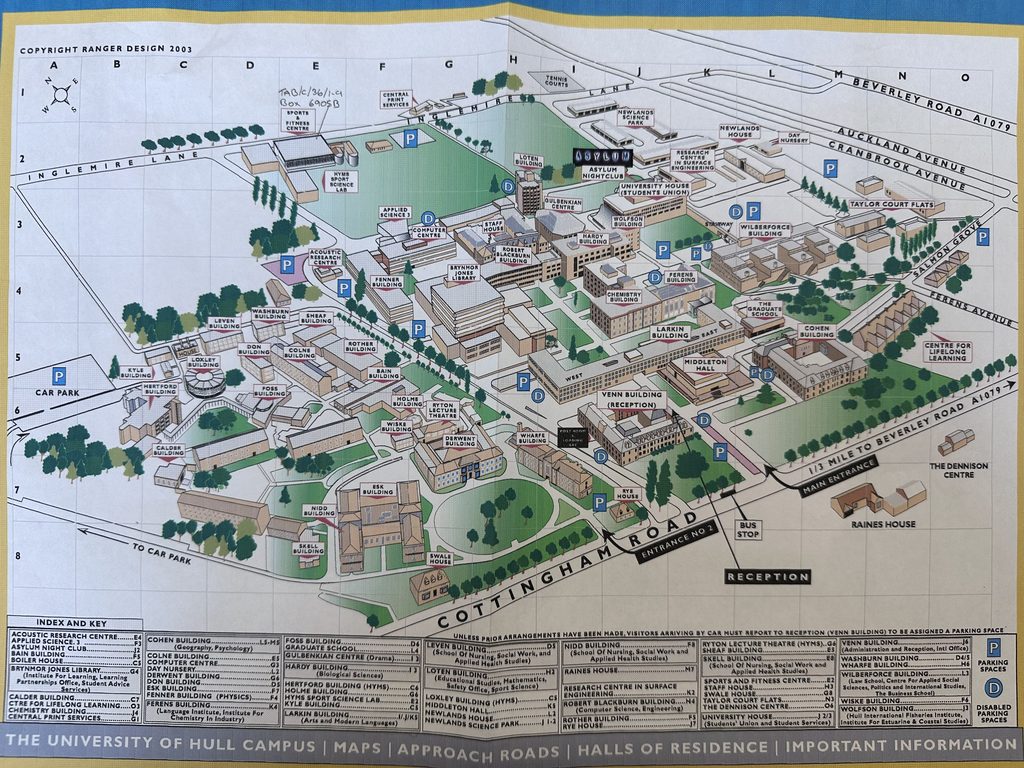
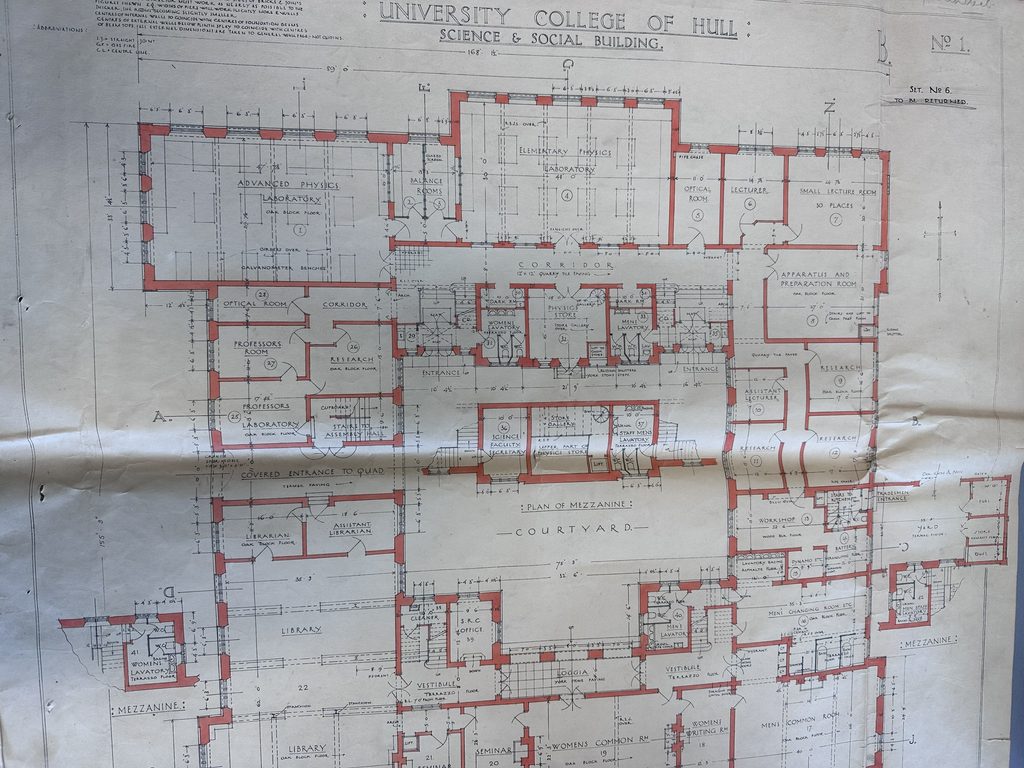
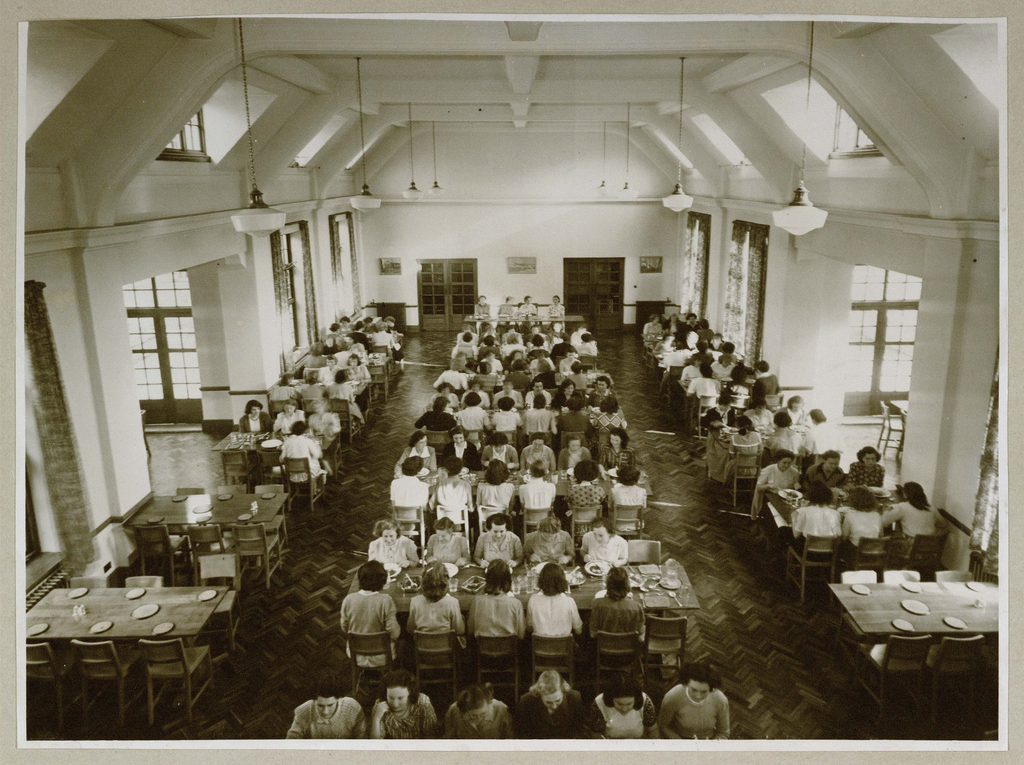
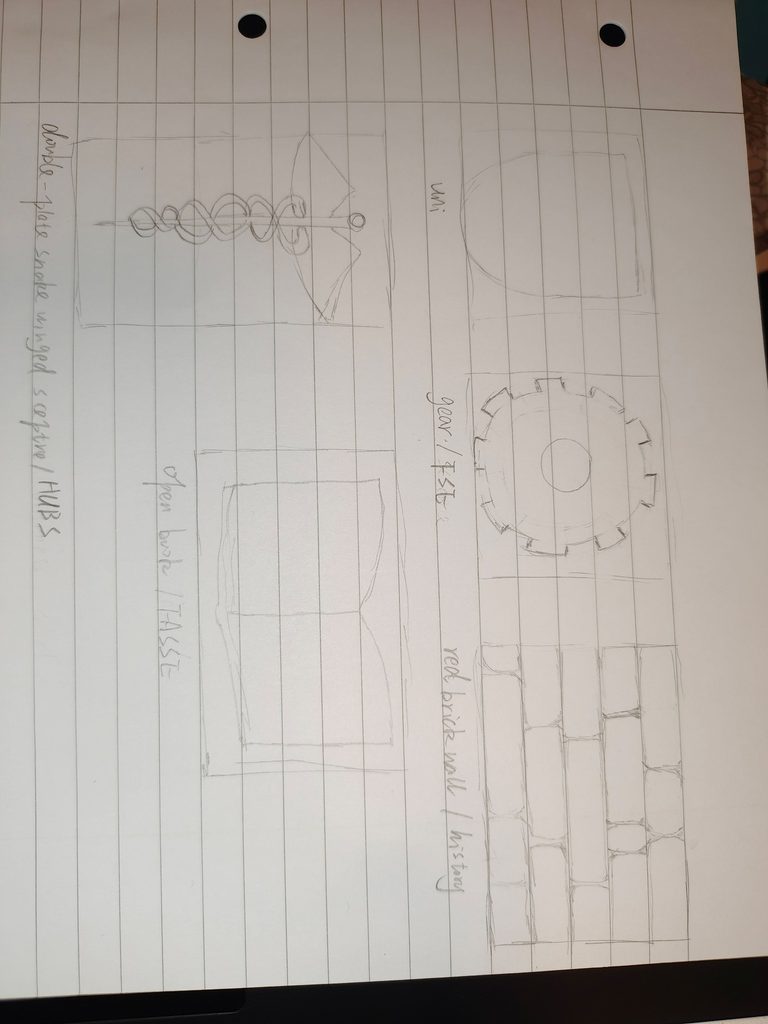
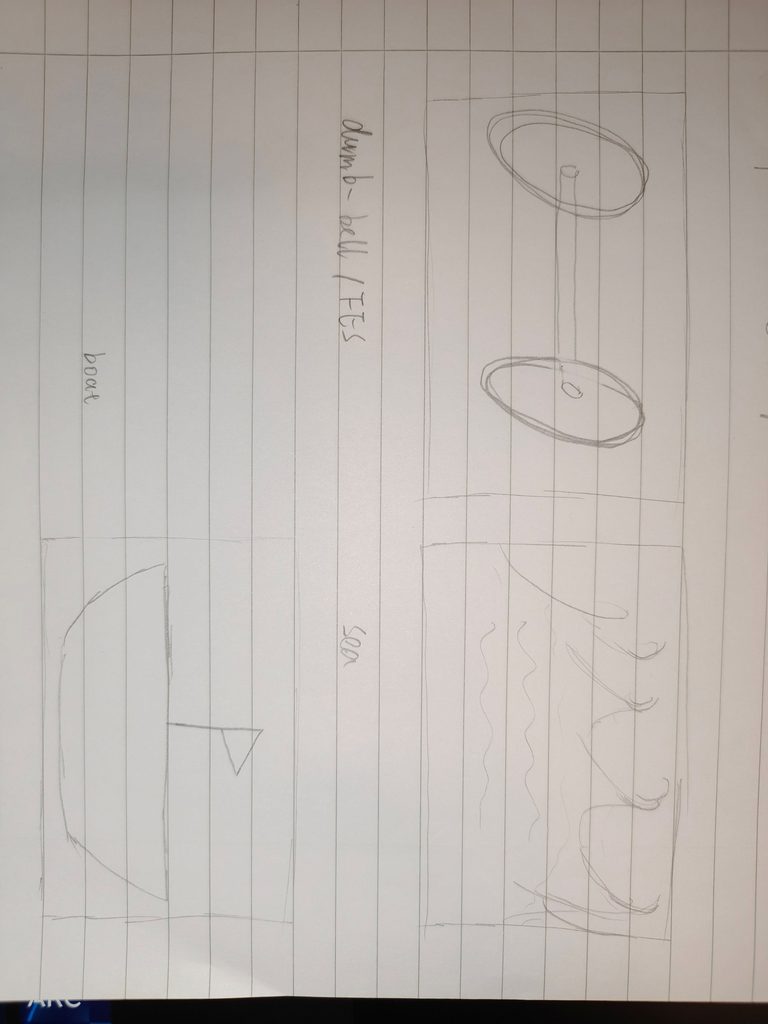
Located in northeast England, the port city of Hull was once named UK City of Culture. The University of Hull, sharing the same name as the city, is now celebrating its centenary. Its founding journey has long been deeply intertwined with the city’s history, marking a highly representative chapter in the modern development of UK higher education. Established in 1927, the University of Hull ranks as the 14th university founded in the United Kingdom. Thanks to the vision of Thomas Ferens, who donated £250,000 in funds and 18 acres of land, the university gained solid physical support for its construction, and its founding spirit of “building a university of the people for Hull” was firmly established ever since. When tracing back this century-long history, the Centenary Archival Photo Project stands out as the most intuitive and striking element. Through these slightly blurred black-and-white photographs steeped in vintage charm, people today can witness the full journey of the university’s founding, and how it evolved from a regional higher education institution into a globally ranked top university and leading research centre. The figures of students in old photos, who maintained bright smiles even under tough conditions, overlap with the silhouettes of modern researchers working with advanced professional tools. What remains unchanged across generations is the vibrant spirit carried by all Hull alumni. This cross-century continuity and sharp contrast across eras forms the core narrative thread of the whole campaign. Accordingly, this centenary event will not only retain retro aesthetics to emphasize the university’s profound historical heritage, but also integrate futuristic elements and symbols of the university’s representative disciplines, to fully demonstrate its evolution and development over the past century. The red brick wall, as a symbolic element of history, with its heavy, orderly texture, serves as an ideal visual material. Other selected elements including shield, gear, caduceus, open book, dumbbell and ocean wave correspond respectively to the university as a whole, the Faculty of Science and Engineering (FSE), Hull University Business School (HUBS), the Faculty of Arts, Social Sciences and Education (FASSE), the Faculty of Sport and Exercise Science (FES), and the marine port heritage of Hull. The target audience of this campaign covers not only current staff and students, but also global alumni, prospective future members and local community residents. For alumni and local residents, this design is expected to evoke their strong sense of belonging and pride; for prospective new members, it will fully demonstrate the university’s dynamic vitality and promising opportunities, delivering the core concept of honouring the past, shaping the future.
(Bibliography):
● University of Hull. (n.d.). Our History. [Online]
● Ferens, T. (1927). Donation Records. Hull History Centre.
● Centenary Archives Photo Project. (2024). Visualizing a Century.
Design History and Comparative Projects
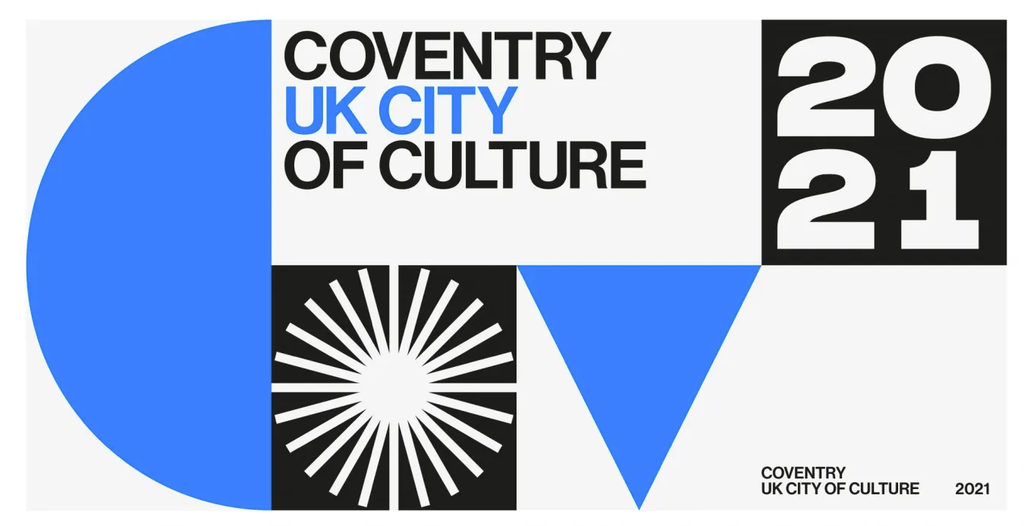
Anniversary identity design has always been a centrepiece, so I researched a number of works and selected the most illuminating among them as references. Uncommon Creative Studio’s work for Coventry (UK City of Culture 2021) also revolves around the city’s history and its present-day positioning, which is closely comparable to Hull’s situation. The brand’s core idea is “Coventry Moves,” with the theme built around “movement” — echoing Coventry’s multiple identities: a motor-industry powerhouse, a tradition of social movements from Godiva to 2-Tone, the near-total post-war reconstruction of the city’s physical fabric, and its current repositioning towards technology and green industry.
The target audience is the city’s 370,000 residents , while also securing buy-in from the city council, universities, cultural institutions, and businesses.
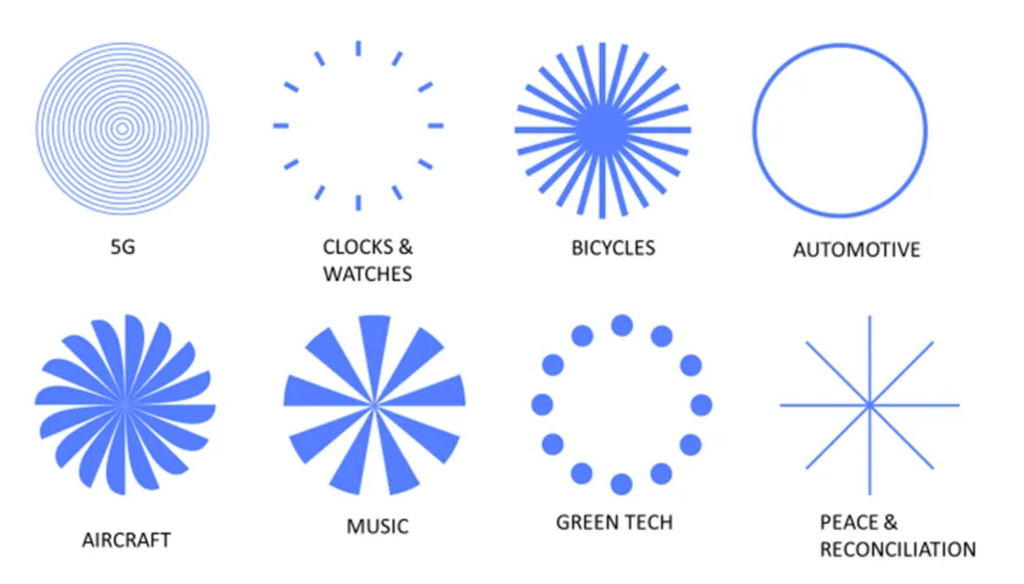
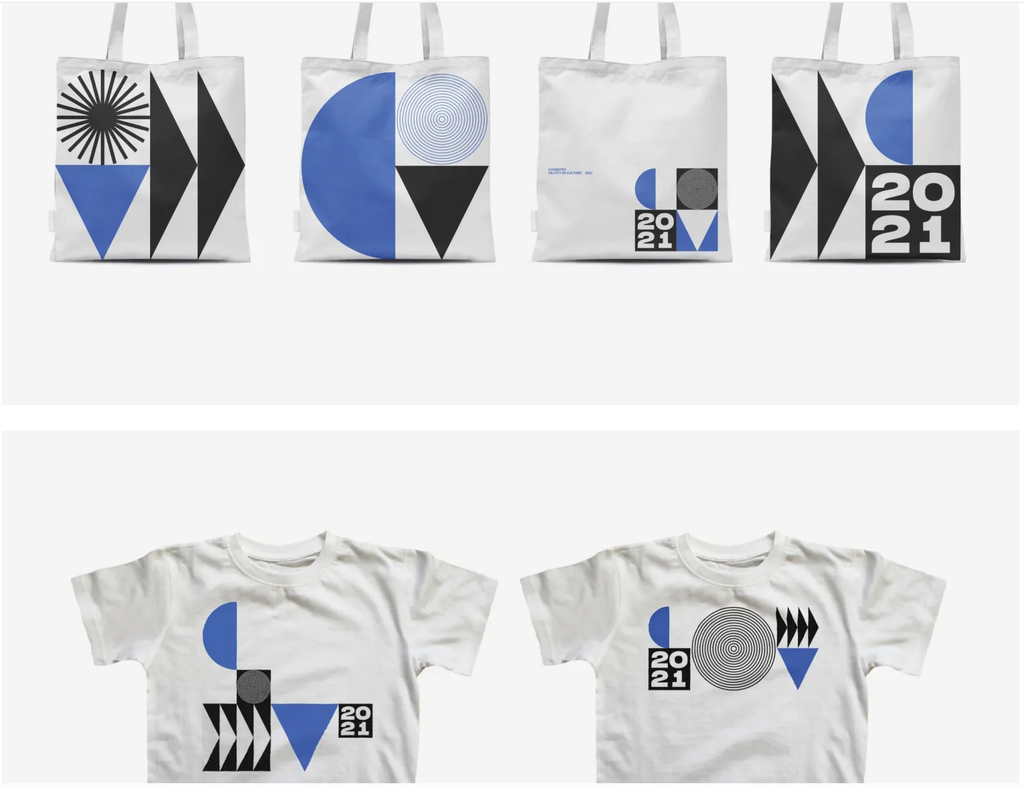
The design draws inspiration from Coventry’s architectural style, using minimal geometric shapes combined in a building-block method to construct a complete system. Each icon represents a historically significant event or a pillar industry. Within the system, elements can be flexibly combined to spell out many shape. The primary palette’s origin is itself a Coventry story: the design team worked with the living museum The Weaver’s House to research the earliest dye colours used here during the medieval textile era — the historical “Coventry Blue” — which carries considerable significance.
Most viewers found the design clever, though some felt the fragments were too scattered and incomplete.
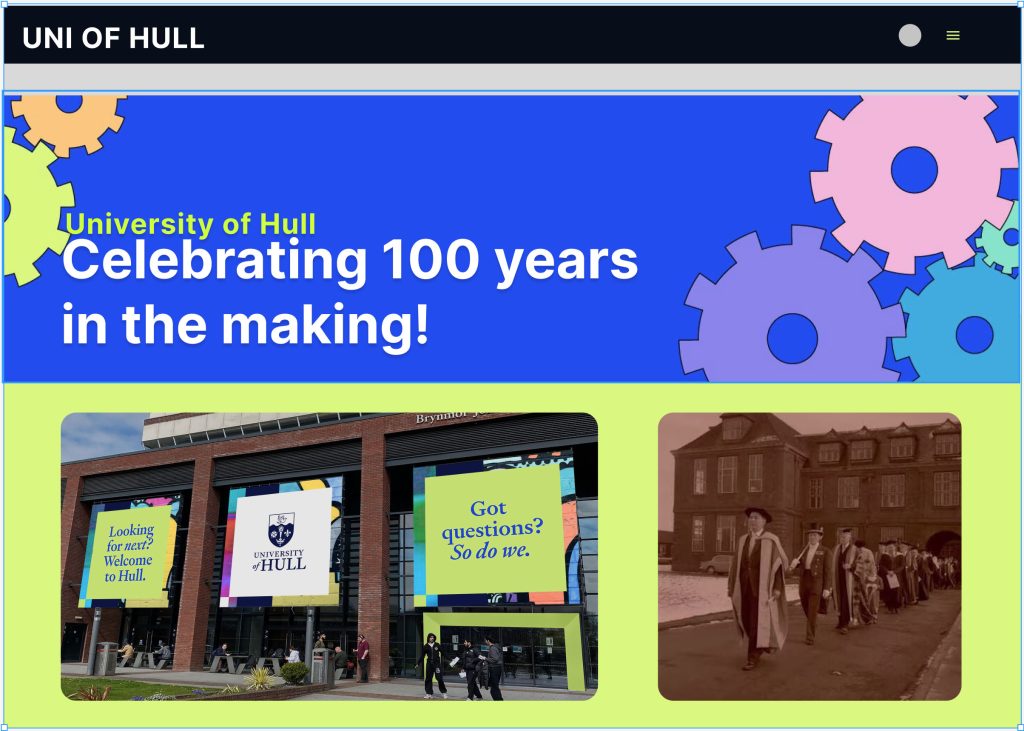
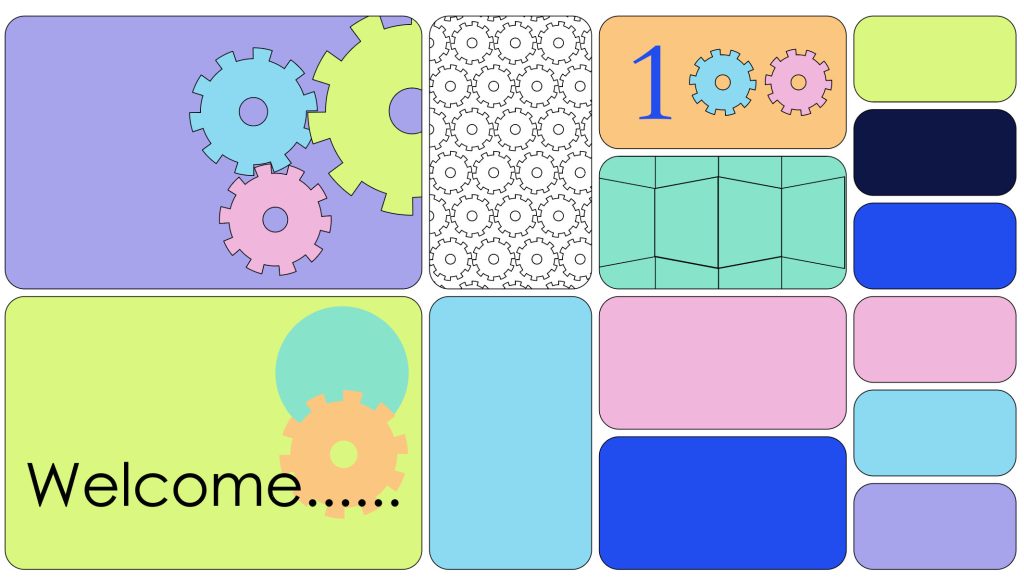
Hull has likewise experienced a long history, so retaining texture is undoubtedly important. I can also select the most representative colours, which can be found on the university’s website. I chose the gear element not only because gears are a crucial component of the Industrial Revolution and modern technology, but also because a gear holds sufficient value whether it exists alone or as part of a whole — each of us is a small gear, together propelling this great ship, the university, forward.
https://www.figma.com/file/4bX6jJgXgY8puj770pDKeZ?node-id=1:9&locale=en&type=design
Proposal Plan
-further campaigns
- Tell More Stories About “People”
Alumni/Student Portrait Exhibition: Shoot a series of portraits with a unified visual style, paired with short interview quotes. These can serve as carousel or grid layout assets on the microsite, and can be paired with student photos from a century ago to create a stronger sense of contrast.
Oral History Project: Interview retired professors, local residents, or first-generation students, or accept and integrate letters received. Film reel or retro cassette tape elements can be used on relevant pages.
“A Day in My Life at Hull”: Document campus life through a first-person perspective, capturing authentic interactions between places and people to showcase the university’s character.
- Explore Hidden Corners: Beyond iconic buildings, focus on easily overlooked places and tell unique stories.
Architectural Detail Photography Contest: Encourage students or photographers to capture distinctive brick wall textures, window structures, or changing light and shadow on campus. These high-quality images can be used directly as backgrounds or texture layers on the website.
Then-and-Now Overlay: Use archival photos from the library’s history center and combine them with photos of the same locations today through stitching, semi-transparent masking, and other techniques to visually demonstrate historical change.
Map Renovation: Create a digital map with important buildings marked. Clicking on them provides a one-tap jump to an information profile, related historical and current photos, and even a virtual check-in.
- Further Seek a Sense of History
Archival Graphic Extraction: Find classic color palettes and typography from old documents such as old library posters and old university crests, and adapt them into new graphics.
Interactive Timeline Experience: Design a vertical or horizontal timeline on the website to showcase the university’s key historical milestones. Each node expands into detailed text and image introductions when clicked.
Artifact/Collection Spotlight: At regular intervals, select a collection item related to the university’s history (such as old laboratory instruments or manuscripts) for full still-life photography and background story writing.
- User Interaction: To make the campaign more shareable, design activities that allow users to participate.
Online Quiz/Trivia: “How much do you know about the history of the University of Hull?” Through a simple quiz game, the results page generates a shareable poster.
User-Generated Content Hashtag: Launch a social media topic (for example, #HullHistoryMoments), collect casual snapshots from people’s phones, and after screening, display them in the “Community Gallery” section of the microsite.
Offline Pop-Up Exhibition: Set up small display boards or installation art in high-traffic areas on campus, guiding passersby to scan the microsite QR code to learn more.
Digital/Physical Puzzle Check-In: Participants in the event receive an exclusive gear-shaped puzzle piece with a signature on it. Eventually, the pieces can be assembled into the image of a ship with the word “Hull” written on it.
Next, I will mainly carry out the design centered on the gear pattern, adopt the official website’s font for text, and use cursive script for some content related to history. As for the color scheme, I will use the official website’s color palette while extracting tones from old photos as embellishments to create a historical atmosphere.
Leave a Reply